Inflammation isn't the enemy; it's what happens afterward that counts. Learn how your body actively resolves inflammation using SPMs and what you can do to support the process.
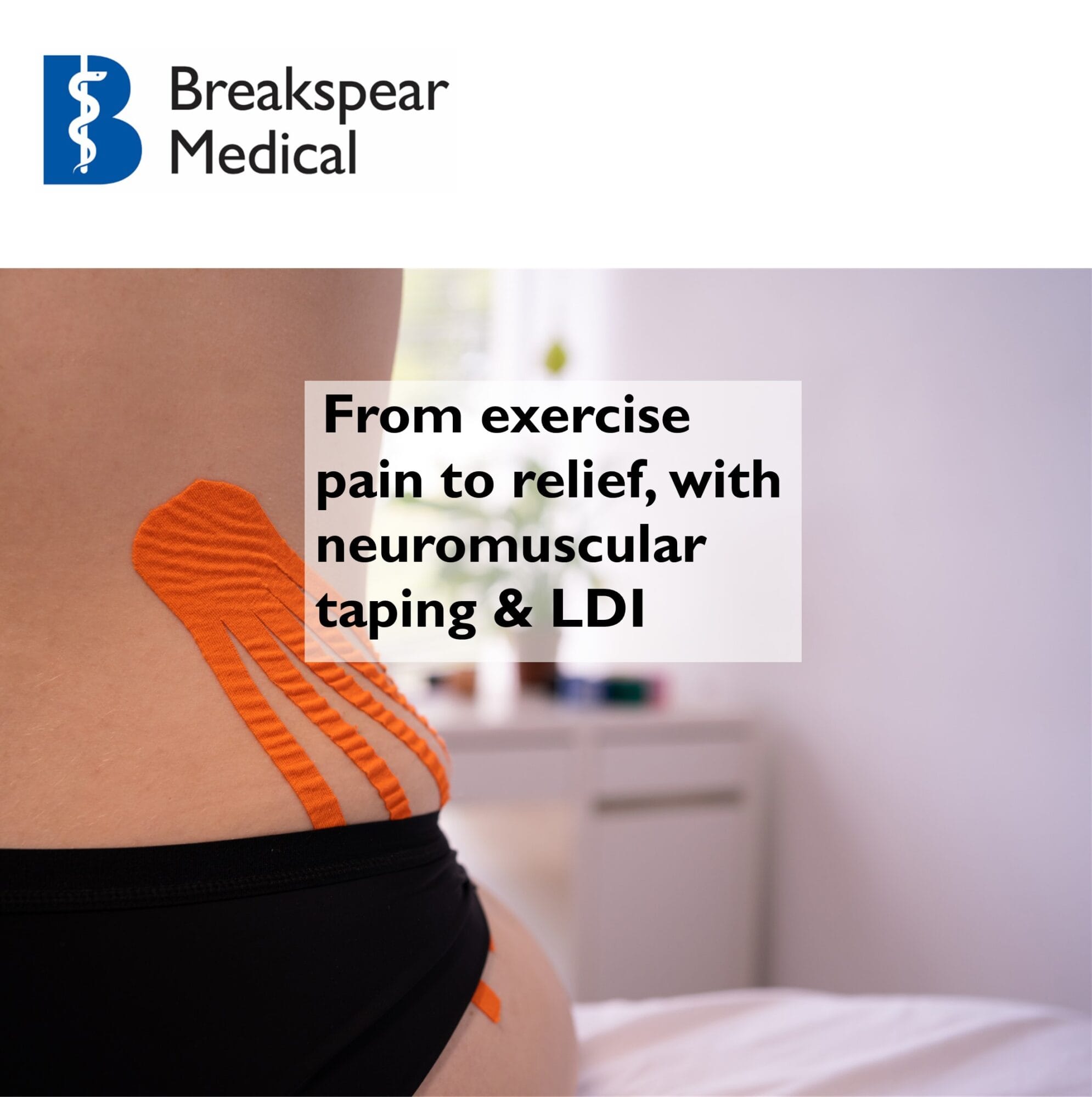
From exercise pain to relief; a patient’s journey with neuromuscular taping & LDI
Sandy* experienced sudden pain after decorating for Christmas. What happened next demonstrates the power of integrated treatment approaches. From neuromuscular taping to Low Dose Immunotherapy (LDI), discover how understanding your body’s unique responses can lead to rapid relief.
When pain strikes unexpectedly
Sandy*, a woman in her late 80s, who had undergone hip replacement surgery many year ago, was doing everything right. Following her physiotherapist’s guidance, she had established a dedicated exercise routine to strengthen her muscles. Her exercises included:
- Leg lifts: lying on her back, lifting each leg to 90°, then lowering to 10° and adding ankle rotations to target different muscle groups.
- Bridge exercises: lying with feet at the edge of the bed, lifting her back to strengthen core muscles.
- Chair rises: standing from a seated position with arms crossed over her chest, then lowering slowly to build leg strength.
She practiced these exercises faithfully each day, and they were helping her maintain strength and stability.
The Christmas decoration incident
Later one afternoon, Sandy was putting up her Christmas decorations, which involved reaching up to hang ornaments and bending down to arrange items under the tree. Suddenly, she felt a sharp pain in her lower back, specifically around the sacroiliac joint on her right side.
At first, she wondered if the exercises had caused the problem. However, since the pain hadn’t appeared during or immediately after her workout, she realised that it was more likely from bending awkwardly while handling a heavy package.
First response: neuromuscular taping
Drawing on her treatment knowledge from Breakspear Medical, Sandy applied neuromuscular tape over the affected joint. This technique, which research from our medical team has shown can help with pain relief and even reduce blood pressure, provided immediate relief. The pain decreased significantly.
The histamine connection
However, Sandy knew her body well and she began to suspect that her food sensitivities might be intensifying the pain.
Like many people, Sandy has a diamine oxidase (DAO) deficiency, which was tested for at Breakspear Medical. DAO is the enzyme responsible for breaking down histamine in the body. When you don’t have enough of this enzyme, histamine can accumulate, leading to prolonged inflammatory responses.
Here’s what happens: when your body encounters a challenge, such as a sensitivity to a food, or from an injury, or even a virus, specialised cells, called mast cells, release histamine. Normally, DAO breaks this histamine down quickly. However, with low DAO levels, histamine lingers, potentially causing or worsening symptoms. When you have food sensitivities, immune complexes (the allergen bound to its antibody) can sometimes settle in injured areas, making pain worse.
The 5-minute solution
Referring to the protocol she’d received from Breakspear Medical for managing reactions, Sandy took the following actions:
- Low-dose immunotherapy (LDI) vaccines. Despite having taken her LDI vaccines earlier, she took them again.
- Alkali salts. She took these to help balance her body’s pH.
- Four capsules of sodium cromoglycate (Nalcrom). Sodium cromoglycate belongs to the group of medications called anti-allergy medications. The capsules are used to treat food allergies and work by preventing the release of substances in the body that cause inflammation within the stomach and intestines.
- Two capsules of DAOfood. She took these to supplement her diamine oxidase levels, which are genetically compromised.
Within just five minutes, all her pain vanished. And it stayed gone.
What this teaches us
Sandy’s experience illustrates an important principle in integrative medicine: sometimes physical discomfort isn’t just about the injury itself.
A challenge to the body, whether it’s an awkward movement, a viral infection, or food sensitivity, can trigger a cascade of reactions. When you understand your body’s unique patterns and have the right tools, you can address symptoms at their root cause.
The combination of neuromuscular taping for immediate support and the LDI vaccine for managing the underlying immune and histamine response provided complete relief.
The science behind the treatment
Neuromuscular taping
Published research conducted by our team at Breakspear Medical and published has demonstrated that neuromuscular taping can:
- reduce systolic and diastolic blood pressure
- affect the autonomic nervous system
- provide pain relief
- support muscle function and recovery
The technique works by gently lifting the skin, which may improve local circulation and provide a form of passive massage to the underlying structures.
Low-dose immunotherapy (LDI)
LDI helps retrain the immune system to respond more appropriately to various triggers, including (but not limited to):
- foods
- environmental allergens
- chemical sensitivities
By addressing immune dysregulation at a fundamental level, LDI can reduce the inflammatory cascade that contributes to pain and other symptoms.
The DAO factor
For patients with diamine oxidase deficiency, supplementing with DAO enzymes and using mast cell stabilizers, such as sodium cromoglycate, can prevent histamine accumulation and the prolonged inflammatory responses it causes.
Key takeaways
If you’re dealing with unexplained pain or reactions:
- Consider the bigger picture: pain isn’t always just structural; it may involve immune responses and food sensitivities.
- Know your body: understanding conditions, such as DAO deficiency, helps you respond effectively.
- Have a protocol ready: when you know what to do during a reaction, relief can be rapid.
- Use complementary approaches: combining structural support (neuromuscular taping) with immune support (LDI) addresses multiple aspects of healing
Your next steps
If Sandy’s story resonates with you, you might have experiences such as:
- unexplained pain that seems disproportionate to the injury
- symptoms that worsen after eating certain foods
- chronic inflammation or sensitivity issues
- pain that doesn’t respond to conventional treatments alone
Our Clinical Team can help you understand your unique biochemistry and develop a personalised treatment protocol.
*Name changed to protect patient privacy
References:
Shah M, Julu POO, Monro JA, Coutinho J, Ijeh C, Puri BK. Neuromuscular taping reduces blood pressure in systemic arterial hypertension. Medical Hypotheses. 2018;116:30-32.
Interested in learning whether this approach might work for you? Contact us to schedule a consultation.
Related Posts